- Winter
- Small habits
- Daily routine
Small habits for winter: one gentle day, from dark morning to dark evening
When it is dark on the way to work and dark again on the way home, big plans shrink fast. Follow one ordinary winter weekday and see where a few small habits still fit.
 By JPott Studios
About a 7 minute read
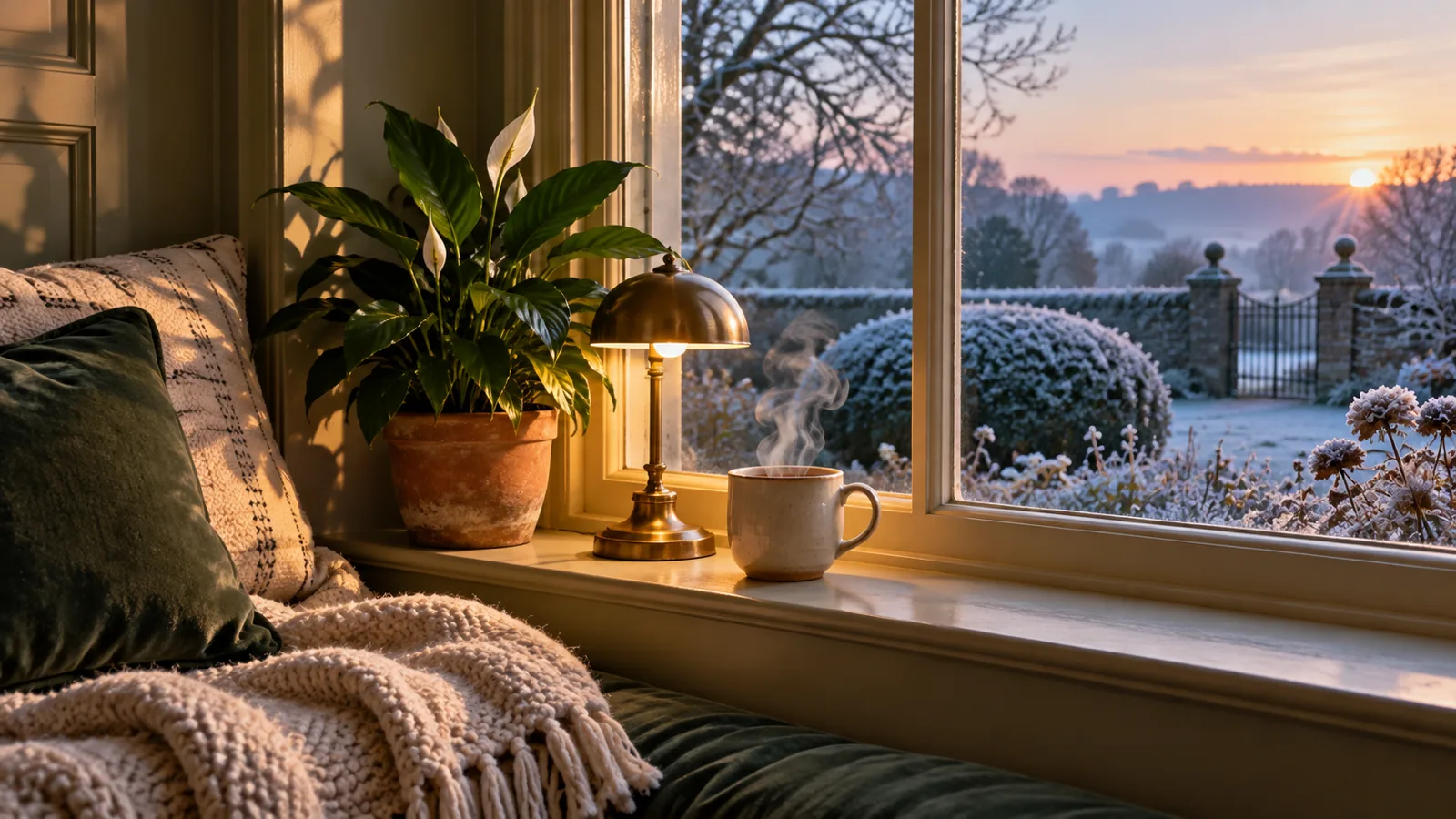
It's 4:50 on a Tuesday afternoon, the lamps are already on, and the walk you promised yourself at breakfast now feels like a trek through the dark. The small habits that survive winter are the ones that take under five minutes, don't need daylight after work, and hang on moments that still happen when it's dark: opening the curtains, boiling the kettle, switching on a lamp.
You don't need a winter overhaul. Two or three habits, shrunk to fit the season, will carry you through to spring in better shape than an ambitious plan you drop by mid-December.
Why do habits get harder when the days get short?
Most habits run on cues, the small signals that remind you to do them. In summer, plenty of those cues come free with the light. A bright evening says walk. A warm morning says stretch on the step. When the clocks went back on Sunday 1 November in the US, and a week earlier in the UK and Europe, a lot of those cues quietly disappeared.
Then the cold and the early dark make the sofa much more tempting. Nothing is wrong with you. The habit has lost its cue, and it needs a new one. Even in Jamaica, where the clocks never change, the evenings draw in noticeably earlier in December than in June, and that shift is enough to move a routine.
The first week after a clock change is its own small upheaval. What follows is for the long stretch after it, from mid-November to the turn of the year.
A winter weekday, with five small habits
Here's one ordinary weekday in December, with a job, a commute and not much spare energy. The five habits in it take about fifteen minutes in total, and each one hangs on something that happens anyway.
Five small habits across one dark day
Each one is tied to a moment that happens whatever the weather.
- Getting upCurtains open, even though it's still dark.
- The kettleA glass of water while it boils.
- LunchtimeTen minutes outside in whatever daylight there is.
- Lamp on at duskFive minutes of tidying one surface.
- Brushing your teethTomorrow's clothes laid out, then two slow stretches.
Getting up in the dark
The alarm goes and it's pitch black. Open the curtains anyway. It feels pointless for the first few weeks of winter, but the grey light arrives while you're getting dressed, and your room fills with it instead of staying shut up in lamplight. It's a two second habit with no effort in it at all.
While the kettle boils
This is the moment for the smallest habit of all: a glass of water, drunk standing up by the kettle. Winter air and indoor heating are both drying, and it's easy to forget to drink when you're not hot. Hooking it to the kettle means you never have to remember it. Our guide to habit stacking shows how to find hooks like this in your own day.
Lunchtime, the one bright window
On a short winter day, lunchtime may be the only daylight you see between Monday and Friday. Ten minutes outside counts, even round the block or to the shop and back. If you can't get out, eat by the brightest window you can find.
When the lamp goes on
Dusk arrives in the late afternoon now, and the first lamp you switch on is a surprisingly good cue. Use it for five minutes of tidying one surface, like the kitchen counter or the hall table. By the time you sit down for the evening, one small corner of the house is calm.
Brushing your teeth
Before bed, lay out tomorrow's clothes, then do two slow stretches before you get under the covers. Dark mornings are much kinder when there's nothing to decide in them.
None of these are heroic. That's the point. On a winter weekday, a habit you can do half asleep is worth ten you have to psych yourself up for.
Let winter work for you: habits the season makes easier
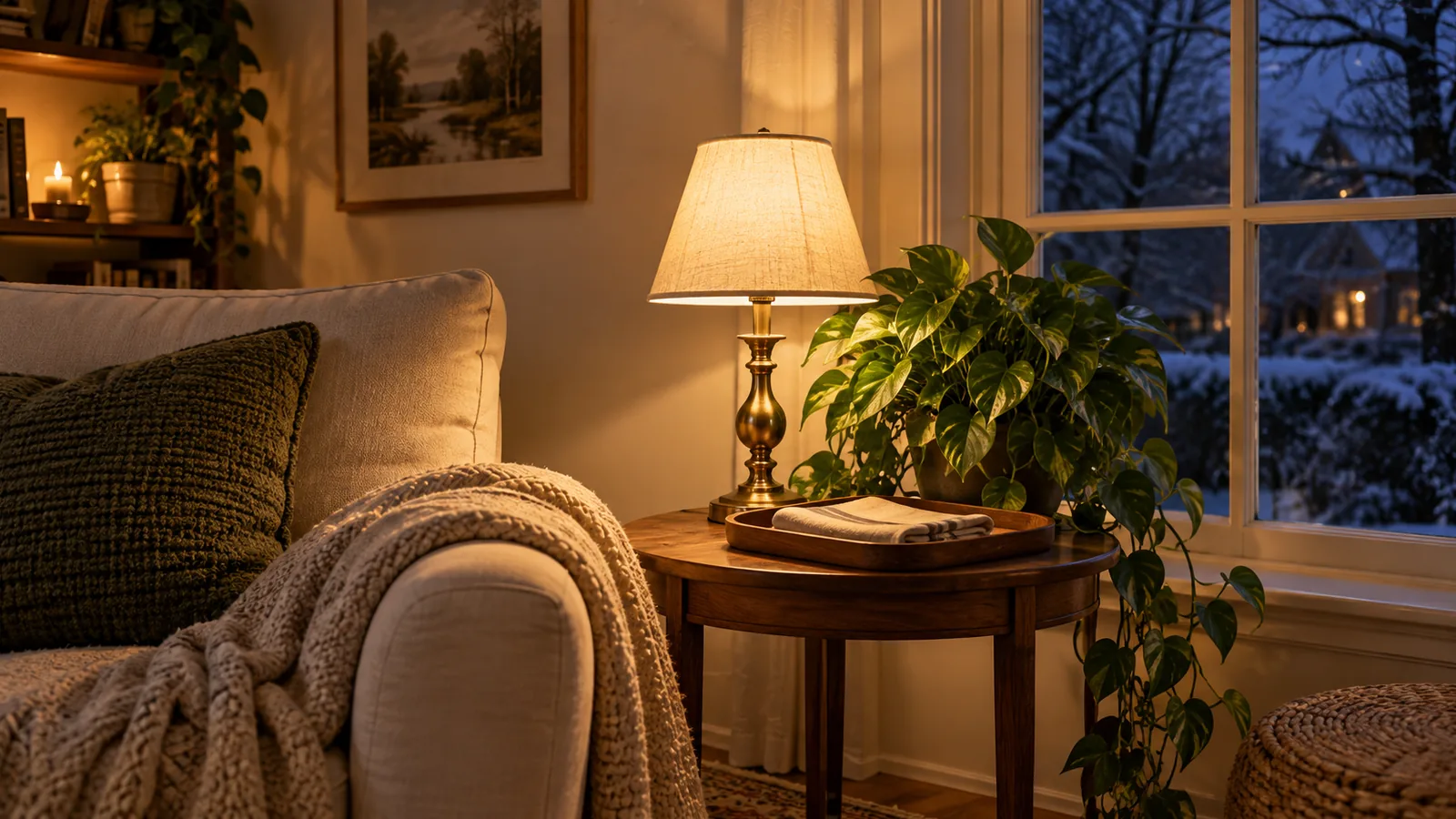
Winter takes some habits away, and it quietly hands you others. Long evenings in, cold mornings and a house that's lit by lamps all make certain small habits easier than they are in summer. It's worth choosing one or two of those on purpose.
What winter gives you, and the habit it suits
Winter bringsA small habit it suits
Long evenings indoorsTen pages of a book under a lamp
Cold morningsA warm drink made slowly, with no phone
Early darknessA set time to switch off overhead lights
Heating on all dayA Sunday check on the houseplants
Soup and stew weatherCooking one extra portion for tomorrow
The end of the yearOne message a week to someone you miss
These aren't consolation prizes. A reading habit built on dark December evenings, or a slow morning drink that becomes the calmest ten minutes of your day, can easily outlast the season. If a summer habit has stopped fitting, our guide to getting your routine back after the clocks go back has ideas for moving it rather than dropping it.
Where does the daylight go? Catch it while you can
Outdoor light, even on a grey day, is much brighter than a typical room with the lights on. Morning daylight in particular helps set your body clock, which is one reason dark winter mornings can leave you groggy.
So in winter, it's worth treating daylight as something you collect on purpose:
- Move anything that needs light, like a walk or a run, to the middle of the day or the weekend.
- Sit near a window for breakfast or your first hour of work, if you can.
- On a bright weekend morning, get outside early rather than saving it for the afternoon, when the light is already going.
- Keep the curtains open all day, and the blinds up.
None of this needs to be a big effort. Most of it is just choosing which side of the room to sit on.
From JPott Studios
One calm email a month
One useful tip, one free printable or tool, and a short note from our apps. Join and get the free welcome pack: printable trackers, a packing list maker and more.
How many winter habits should you keep?
Two or three is plenty. Winter comes with its own load: shorter days, colds, the December holidays, travel and money worries for some. Adding a long list of new habits on top rarely lasts. If you want ideas to pick from, our list of small habit ideas for a calmer life has thirty, most under five minutes.
For each habit, decide on a floor: the smallest version that still counts. On a heavy, dark, tired day, the floor is the goal. One glass of water. One stretch. Curtains open. Doing the floor keeps the habit going and keeps you from the all or nothing thinking that ends so many winter plans.
Plan for rest days too, especially around the holidays. Planted Habits, the habit app we make, lets you mark a rest day that never breaks your streak, and each habit's plant keeps every stage it has grown while you're away, which suits a season with so many interruptions in it.
Being kind to yourself until the light returns
The shortest day in the northern half of the world falls on Monday 21 December this year. After that, the days start to lengthen again, slowly at first. It helps to remember that winter is a season, not a new normal.
Expect a bit less of yourself between now and then. A habit you do four days out of seven in December is doing its job. If you miss a day, the never miss twice rule is a kind way to get straight back on track without starting over.
If you'd like to see your winter on paper, our free printable habit tracker fits a month on one page, so the small wins show up even on the gloomiest weeks.
Winter habit questions
What are good small habits for winter?
Habits that take under five minutes and don't depend on light after work: opening the curtains as soon as you get up, a short walk at lunchtime, a warm drink with no screen, a few stretches before bed, and laying out tomorrow's clothes. Tie each one to something you already do every day.
Why is it harder to keep habits in winter?
Many habits quietly depend on cues that vanish in winter, like light after work or a warm evening that invites a walk. Cold and dark also make the sofa more tempting. The habit hasn't failed, it has lost its cue, so give it a new one.
How do I stay motivated when it gets dark early?
Rely less on motivation and more on small, fixed moments. Keep habits short, link them to things like the kettle or switching on a lamp, and move anything that needs daylight to the middle of the day or the weekend.
Should I start new habits in winter or wait until January?
You don't need to wait for a date on the calendar. Winter is a good time for one or two very small habits that make the season easier. Bigger changes can wait for a time when you have more energy.
Is it normal to have less energy in winter?
Lots of people notice they feel slower and sleepier when the days are short. If low mood or tiredness lasts for weeks, or gets in the way of daily life, speak to a doctor. It is worth checking, and help is available.
From JPott Studios
One calm email a month
One useful tip, one free printable or tool, and a short note from our apps. Join and get the free welcome pack: printable trackers, a packing list maker and more.