- Clock change
- Routines
- Darker evenings
Getting your routine back after the clocks go back
One extra hour on Sunday, then a week of waking too early, dark walks home and habits that suddenly feel out of place. Here's how to settle back in, one day at a time.
 By JPott Studios
About a 7 minute read
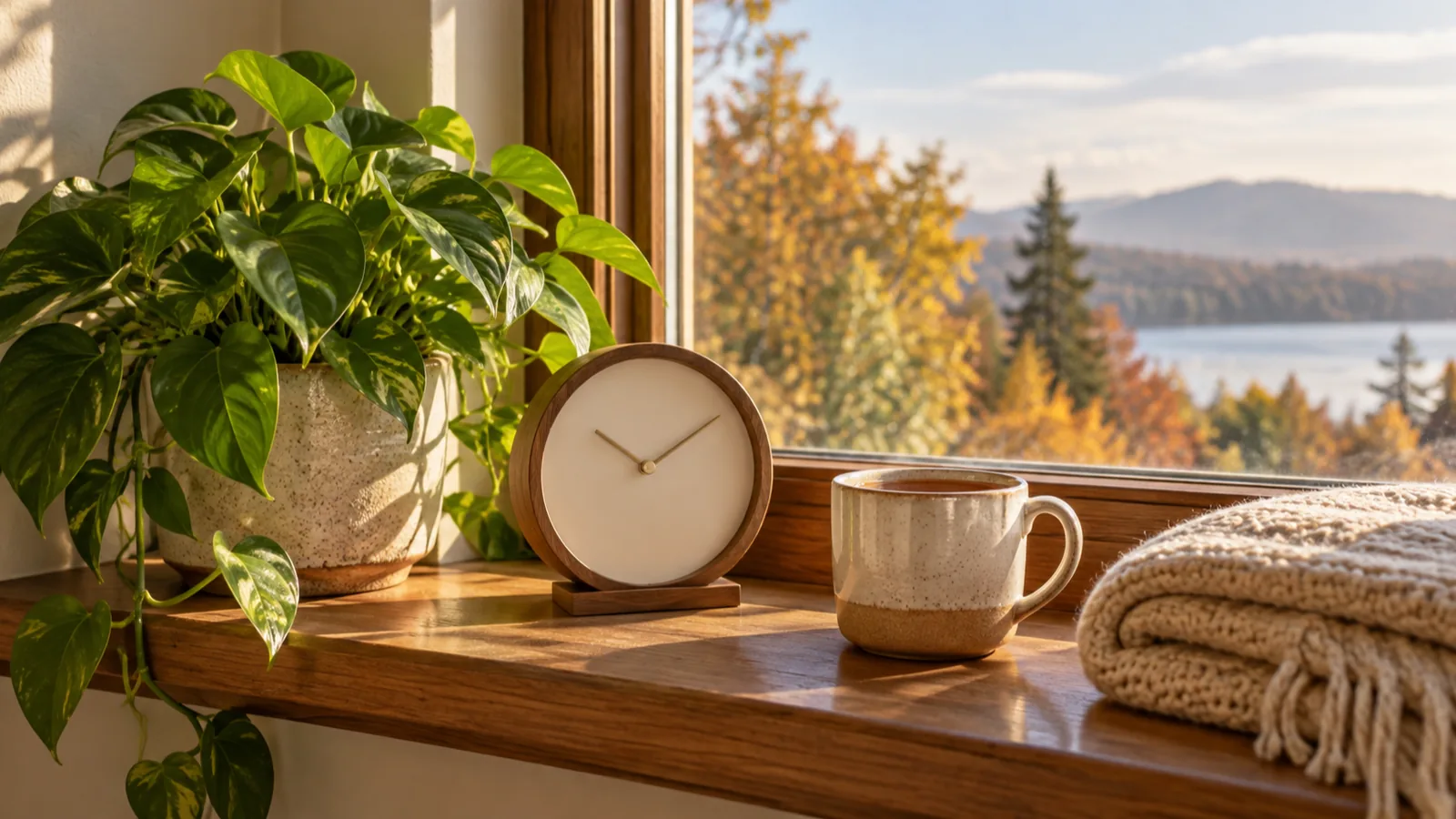
To get your routine back after daylight saving time ends, keep your habits tied to the same moments in your day rather than the same clock times, move the ones that relied on daylight, and give your body about a week to catch up. Most habits don't need a restart. They need a gentle nudge in the days after the change, and a little patience if one slips.
Below is a plan for the week itself, day by day, plus what to do with habits the darker evenings have made awkward.
When do the clocks go back in 2026?
It depends where you live, and some places don't change at all:
- UK, Ireland and much of Europe: Sunday 25 October 2026. It's always the last Sunday in October.
- Most of the US and Canada: Sunday 1 November 2026. It's always the first Sunday in November.
- Jamaica and many Caribbean islands: no change. Your clocks stay where they are all year.
Where the clocks do change, they go back one hour in the early hours of Sunday morning. In the UK and the US that happens at 2am, so 2am becomes 1am. You get an extra hour that night, which sounds lovely, and often is. The tricky part comes in the days after, when mornings arrive early and evenings go dark much sooner than you're used to.
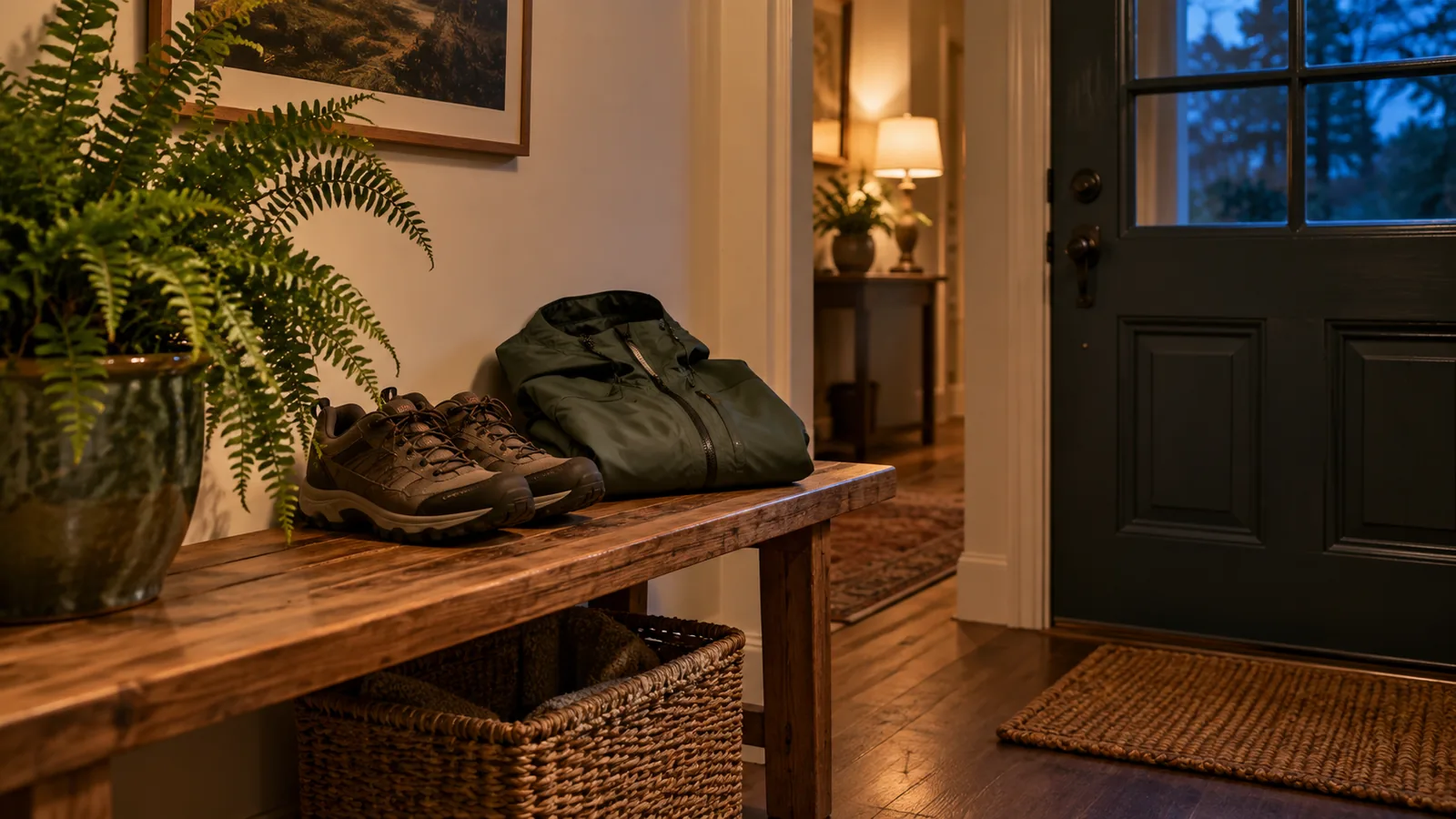
What actually changes for your habits?
Your habits haven't moved. The world around them has. Your body is still running on the old time for a few days, so 7am by the clock can feel more like 8am, and the light at both ends of the day shifts by an hour overnight.
Mornings and evenings, the week after
The same hour moves, but it lands differently at each end of the day.
Morning habits
Easier, for a while
- Mornings are lighter for a few weeks
- Many people wake before the alarm
- A good week to start a morning habit
Evening habits
Harder, straight away
- It can be dark by about 5pm
- Outdoor walks and runs feel less safe
- Tiredness arrives earlier than the clock says
That split is the key to the whole week. Morning habits usually just need protecting, so they don't drift later as your body adjusts. Evening habits may need a new home.
Your clock change week, day by day
This plan runs from the Friday before the change to the weekend after. Use the dates for where you live: the weekend of 24 and 25 October in the UK and Europe, or 31 October and 1 November in the US and Canada.
A gentle clock change week
One small job a day. Nothing needs to be perfect.
- Friday beforeLook at each habit and ask one question: does it need daylight? Note the ones that do.
- Saturday nightChange the clocks that don't update themselves before bed, so Sunday starts on the new time.
- Sunday, the changeKeep your usual morning habit at its usual clock time. If you wake early, enjoy the quiet hour rather than filling it.
- MondayMove any habit that relied on evening light, like a walk after work, to lunchtime or the morning.
- Tuesday to ThursdayKeep going at the new times. If a reminder now rings at an odd moment, shift it once and leave it.
- Next weekendCheck in with yourself. Which habits settled? Pick one that didn't and make it smaller or move it.
You'll notice the plan doesn't ask you to do more on any day. That's on purpose. The week after a clock change is a settling week, not a week for new goals, unless the goal is a morning one that the lighter mornings make easy.
Move a habit, don't drop it
When an evening habit stops working, the tempting thing is to pause it "until spring". A better choice is usually to give it a new slot or a new form for the winter months.
- An evening walk could become a lunchtime walk, or ten minutes outside in the morning light.
- Gardening or watering outdoor plants could move to weekend mornings.
- An after-work run could shift to the morning, or indoors for a few weeks while you find a lit route you trust.
- Reading before bed might need to move earlier, if you find yourself falling asleep over the first page.
- An evening stretch or tidy can usually stay put, since it doesn't depend on the light at all.
If your habit tracker lets you edit a habit's reminder time, change it now rather than ignoring an alarm that rings at the wrong moment every day. A reminder you keep swiping away soon becomes one you stop noticing. And if you're looking for a replacement that suits darker evenings, our list of small habit ideas for a calmer life has plenty of indoor ones.
Keep the anchor, not the hour
Habits tied to a clock time get knocked about by a clock change. Habits tied to something you already do barely notice it.
"Read at 9pm" can feel strange when 9pm suddenly feels like 10pm. "Read after I brush my teeth" happens whenever your evening actually ends. The same goes for mornings: "stretch while the kettle boils" works at 6am or 8am, and it doesn't care what the clock says.
If most of your habits are pinned to times, this week is a good moment to link a couple of them to anchors instead. Our guide to habit stacking shows how to find those anchors, and a simple morning routine of three small steps is a lovely thing to build while the mornings are light.

From JPott Studios
One calm email a month
One useful tip, one free printable or tool, and a short note from our apps. Join and get the free welcome pack: printable trackers, a packing list maker and more.
If your clocks don't change, but other people's do
In Jamaica, your own day doesn't move at all. But if your habits involve people abroad, they might. Jamaica stays on the same time all year, so the gap to places that change their clocks gets smaller by an hour for the winter.
- The UK: the gap drops from six hours to five from Sunday 25 October 2026.
- New York and most of the eastern US: from Sunday 1 November 2026, the clocks there match Jamaica's instead of being an hour ahead.
So a weekly call with family in London, an online class run from New York, or a workout video that goes live at a set time can all shift by an hour on your clock. Check anything shared with another country the week the clocks change there, and move your own reminder to match.
What if a habit slips during the change?
Then it slips, and that's fine. A disrupted week is exactly when one missed day is most likely, and it tells you nothing about whether the habit will last. Pick it up the next day in its smallest form. The never miss twice rule is a good one to lean on this week: one miss is a blip, and the day after is the one that counts.
If you've already missed a few days and your streak counter has gone back to zero, our guide on what to do when you break a streak helps you look at the bigger picture. In Planted Habits, the habit app we make, a missed day doesn't cost a habit's plant any of the stages it has grown, and you can mark a rest day for a disrupted weekend without breaking your streak.
Clock change questions
How long does it take to adjust when the clocks go back?
Many people feel settled within a few days to a week, though some take a little longer. Keeping your wake-up time steady and getting daylight in the morning usually helps your body catch up.
Should I change my habit times when the clocks go back?
Only for habits that depend on daylight or feel wrong at the new time. Morning habits can usually stay at the same clock time. Evening habits that relied on light, like an after-work walk, often work better moved to lunchtime or the morning.
How do I keep exercising when evenings get dark?
Move outdoor exercise to the morning or lunchtime, choose a well-lit route, or switch to something indoors for the darker months. A shorter version you'll actually do beats a longer one you keep postponing.
Is the week after the clocks change a good time to start a new habit?
It can be for a morning habit, because mornings are lighter for a few weeks and many people wake a little earlier. For anything in the evening, wait until your routine has settled again.
Does Jamaica change its clocks?
No. Jamaica stays on the same time all year, so your own routine doesn't shift. The time difference to the UK, the US and Canada does change, though, so check any calls or classes shared with people there.
From JPott Studios
One calm email a month
One useful tip, one free printable or tool, and a short note from our apps. Join and get the free welcome pack: printable trackers, a packing list maker and more.